
Structural MovementSelection guide
Select an expansion joint system from the structural gap, the required movement and the traffic crossing it. The visible cover width is not the same measurement as the joint opening.
Read guide: Expansion joint selection: gap, movement and traffic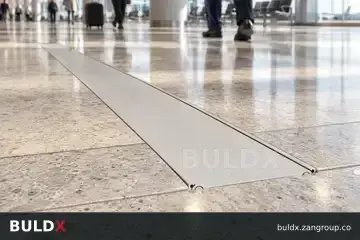
Structural MovementSelection guide
Choose between recessed and surface-mounted floor joints by the available floor depth, edge condition and construction sequence. The two installation approaches should not be treated as interchangeable finishes.
Read guide: Recessed versus surface-mounted floor expansion joints
Structural MovementSelection guide
Read movement values using the catalogue's stated reference position and units. Opening capacity and closing capacity are separate checks, not a single number to compare by appearance.
Read guide: How to read positive and negative movement values
Structural MovementSelection guide
A parking joint needs a traffic assessment as well as a movement check. Vehicle type, wheel contact, turning and braking conditions affect the selection and supporting detail.
Read guide: Parking expansion joints: wheel loads and crossing conditions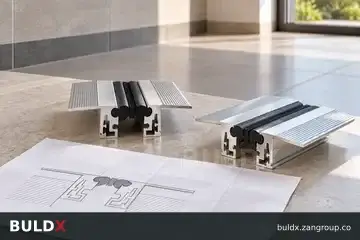
Structural MovementSelection guide
Floor-to-wall joints need a coordinated change of plane. A floor cover and a wall cover selected independently may leave an incomplete corner detail.
Read guide: Keeping expansion joints continuous from floor to wall
Structural MovementSelection guide
Wall and ceiling joints should match the substrate, movement direction and finish build-up. A suspended ceiling detail needs coordination with its support system, not only a matching visible cover.
Read guide: Wall and ceiling expansion joints: recessed and exposed details
Structural MovementSelection guide
Define the required movement envelope before choosing a seismic or thermal joint. A product's category name does not replace the structural engineer's design brief.
Read guide: Seismic and thermal movement joints: define the design brief
Structural MovementSelection guide
A fire barrier at a movement joint must be assessed as an assembly with its orientation, opening and movement conditions. A visible cover profile does not establish a fire-resistance rating.
Read guide: Fire barriers at expansion joints: check the complete assembly
Structural MovementSelection guide
Replacement joint selection starts with a survey of the opening and its supporting edges. The visible width of the old cover is not a reliable measurement of the structural gap.
Read guide: Replacing an existing expansion joint without guessing the gap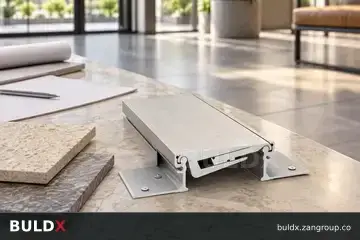
Structural MovementSelection guide
An expansion joint enquiry should state gap, movement, traffic, build-up and location. These fields let suppliers compare technically relevant systems instead of proposing products that merely look similar.
Read guide: What to include in an expansion joint enquiry
Structural MovementSelection guide
A joint survey needs more than one opening measurement. Record where, when and under what site conditions each reading was taken, so the design team can compare the observed gap with the installation range of the proposed profile.
Read guide: Recording Joint Openings Before Ordering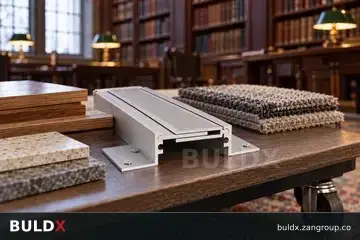
Structural MovementSelection guide
Coordinate a floor joint against the complete finished floor build-up. Screed, adhesive, underlay and the final surface can change the required profile level even when the structural slab remains unchanged.
Read guide: Coordinating Joint Profiles with Layered Floor Finishes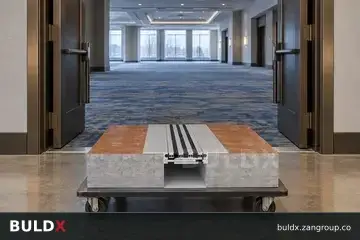
Structural MovementSelection guide
An expansion joint near a doorway needs a combined review of the moving profile and the opening door. Door clearance should be checked against the selected joint assembly and its expected position, not only the surrounding floor finish.
Read guide: Planning Expansion Joints at Door Thresholds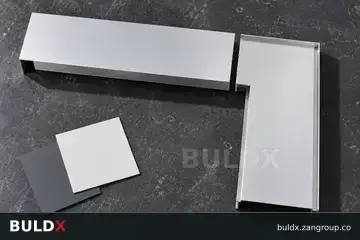
Structural MovementSelection guide
A joint quantity schedule should identify T junctions, cross intersections and directional changes as separate coordination items. Straight running metres do not describe how a multi-branch joint will meet at an intersection.
Read guide: Scheduling T and Cross Intersections in Joint Runs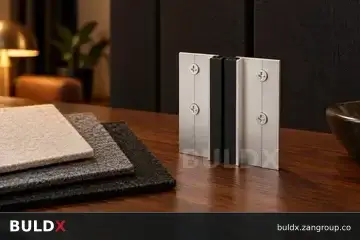
Structural MovementSelection guide
Acoustic performance at a building joint needs its own requirement and evidence. An expansion joint cover that bridges a visible gap should not be assumed to provide the sound separation required between adjoining spaces.
Read guide: Reviewing Acoustic Requirements at Building Joints
Structural MovementSelection guide
Inspection access should be planned before a joint cover disappears behind furniture, partitions or permanent fit-out. The useful question is whether the approved assembly can be inspected or serviced after the building is occupied.
Read guide: Keeping Joint Covers Accessible for Future Inspection
Structural MovementSelection guide
Traceability links delivered joint components to the locations where they are installed. It is especially useful when similar profiles arrive in different shipments or a design revision changes only one part of the assembly.
Read guide: Tracing Joint Components from Delivery to Location
Structural MovementSelection guide
A photographic baseline makes future joint inspections easier to compare. Take repeatable views at handover and connect them to fixed locations, so later teams can distinguish a new change from the original condition.
Read guide: Building a Photographic Baseline for Expansion Joints
Structural MovementSelection guide
A joint interface works best when each trade knows what it must provide and what it must inspect. Unassigned edge preparation, waterproofing or accessory work can leave gaps even where the profile order itself is complete.
Read guide: Assigning Responsibility at Expansion Joint Interfaces
Structural MovementSelection guide
Spare joint inserts should be identified by their exact compatible assembly, not by colour or nominal width alone. A similar-looking elastomer strip may use a different seating geometry or have different documented properties.
Read guide: Planning Replacement Inserts and Spare Joint Components