Reviewing Acoustic Requirements at Building Joints
Acoustic performance at a building joint needs its own requirement and evidence. An expansion joint cover that bridges a visible gap should not be assumed to provide the sound separation required between adjoining spaces.
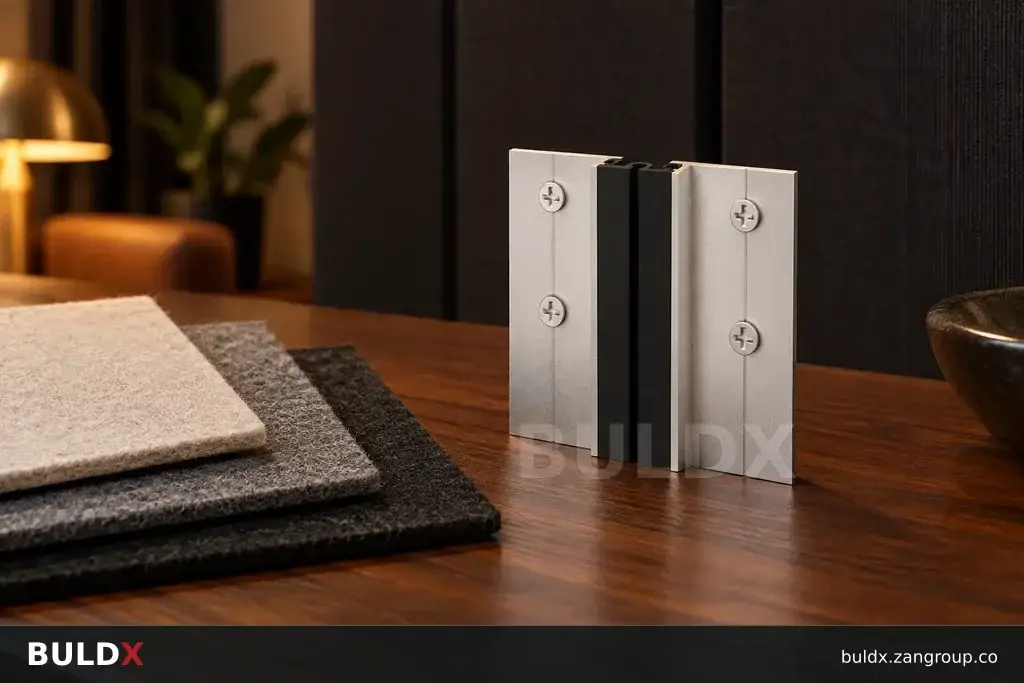
Selection considerations
Identify what the acoustic consultant expects at the joint: the location, adjoining wall or floor build-up and the applicable performance objective. Keep that brief separate from movement, fire and water-control requirements, even where several functions meet in one assembly.
Review the complete interface rather than an isolated strip. Open paths, discontinuous linings and services near the joint may influence the result. Ask how any proposed acoustic component accommodates the movement envelope without relying on rigid material that conflicts with the structural separation.
Retain drawings and supporting evidence for the actual combined assembly. Where evidence does not cover the proposed arrangement, record the gap in the submittal and seek the design team's decision. A photograph of a neat cover is useful for appearance approval, but it is not acoustic test evidence.
Before you specify or order
- Obtain the acoustic brief
- Review adjoining assemblies and services
- Coordinate acoustic continuity with movement
- Record the scope of supporting evidence
Relevant BULDX catalogue examples
These records illustrate the product types discussed. Compare the full specifications before selecting; listing here does not establish project suitability or make the items interchangeable.
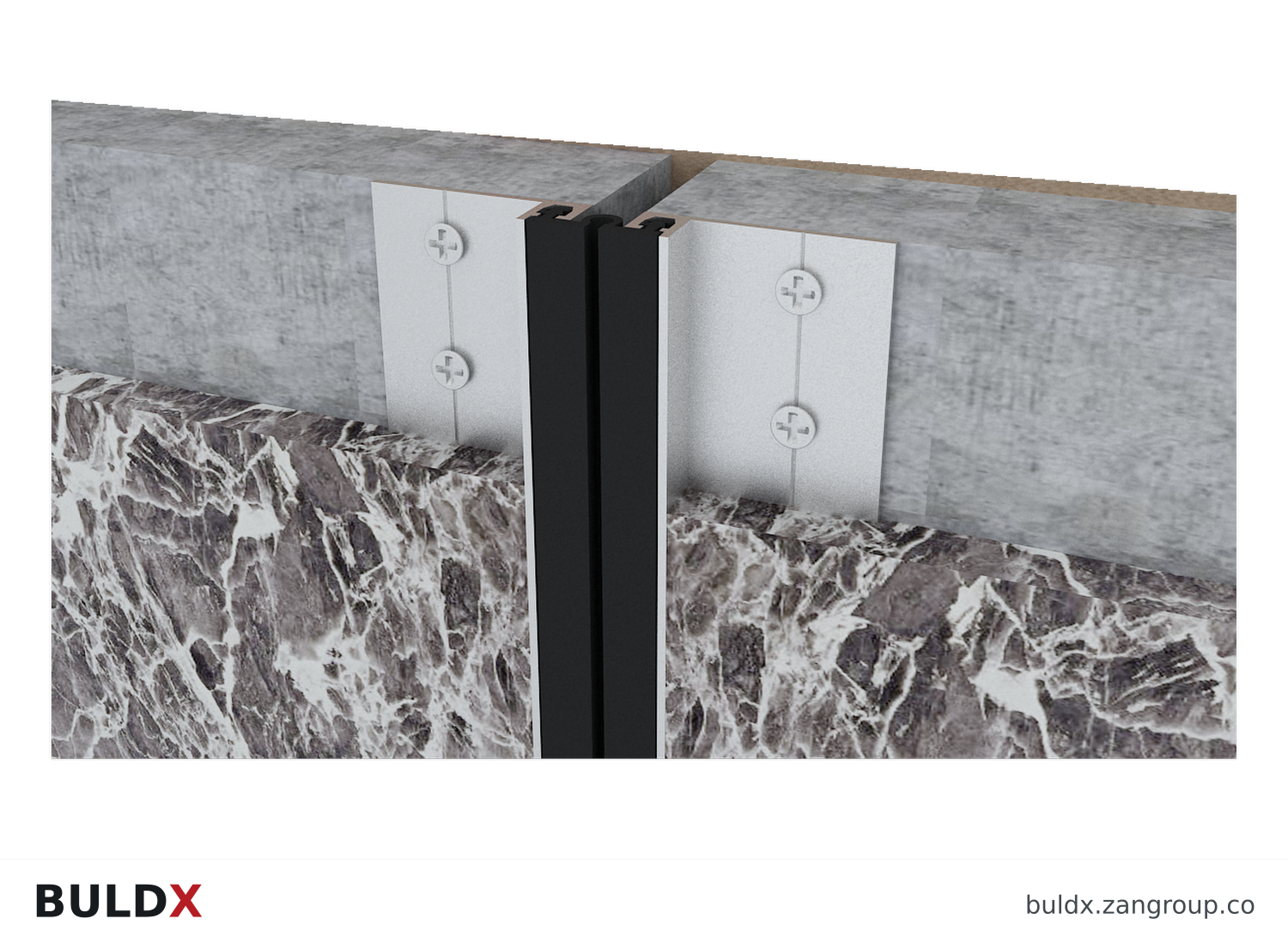
BDX-EJ-WC-UF-1-030 · Catalogue geometry reference; a family illustration may be shared by variants. Consult the exact selected drawing for variant dimensions and assembly requirements.| Product and code | Selected catalogue fields |
|---|---|
BDX-EJ-WC-UF-1-03030 mm Concealed Wall/Ceiling Joint - Type 1Wall & Ceiling Joints |
|
BDX-EJ-WC-UF-1-100100 mm Concealed Wall/Ceiling Joint - Type 1Wall & Ceiling Joints |
|
BDX-EJ-WC-UF-1E-100100 mm Concealed Wall/Ceiling Joint - Type 1EWall & Ceiling Joints |
|
Common question
Does a sealed-looking joint prove acoustic separation?
No. Appearance cannot establish acoustic performance; the relevant assembly and supporting evidence need to be assessed.
References and scope
Product fields are from the BULDX catalogue. Confirm the current selected drawing, supporting performance documents and approved project detail before ordering. External references, where listed, provide background guidance and do not certify these products.