
Industrial Floor JointsSelection guide
Identify the joint's function before comparing industrial floor profiles. Construction, isolation and crack-control joints address different details within the slab design.
Read guide: Construction, isolation and crack-control slab joints
Industrial Floor JointsSelection guide
Compare joint height against the layer in which the profile is installed. Overall floor thickness and the thickness of a separate screed are not necessarily the same dimension.
Read guide: Matching industrial joint height to slab and screed depth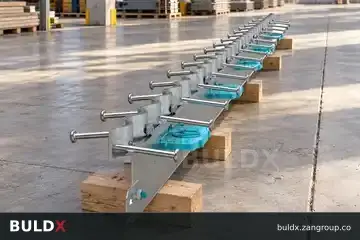
Industrial Floor JointsSelection guide
A sinusoidal joint introduces a shaped crossing line, but its suitability still depends on the slab detail, wheel traffic and the selected assembly. The wavy appearance alone does not establish a capacity.
Read guide: Sinusoidal floor joints: compare geometry and application
Industrial Floor JointsSelection guide
Small hard wheels can make joint edges especially important in a warehouse. Describe the actual handling equipment rather than specifying a floor joint only as industrial or heavy duty.
Read guide: Warehouse floor joints and small-wheel traffic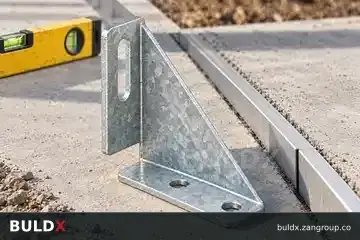
Industrial Floor JointsSelection guide
Installation supports help establish the profile position, but they must suit the joint and construction method. Treat them as coordinated components rather than generic accessories.
Read guide: Installation supports: keeping slab joint profiles aligned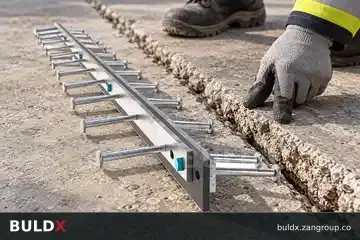
Industrial Floor JointsSelection guide
Select a repair joint after measuring the damaged area and identifying the underlying joint function. A replacement profile should address the existing detail, not merely cover visible damage.
Read guide: Repair joints: survey the damaged edge before selecting a profile
Industrial Floor JointsSelection guide
Consider stainless steel joint profiles where the specification identifies a relevant exposure, cleaning or finish requirement. The material choice should be tied to a documented project condition.
Read guide: When to consider stainless steel industrial floor joints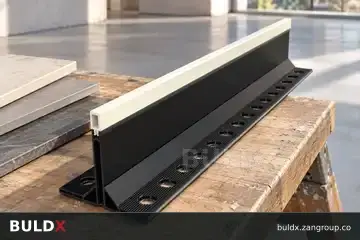
Industrial Floor JointsSelection guide
Coordinate a screed joint with the floor finish and the joint layout below. A finishing layer should not accidentally bridge a movement line that the design intends to preserve.
Read guide: Screed movement joints and the finish above them
Industrial Floor JointsSelection guide
Inspect industrial floor joint deliveries by code, height and section geometry. Profiles from one family can look nearly identical while belonging to different slab depths.
Read guide: Checking industrial floor joint deliveries before installation
Industrial Floor JointsSelection guide
A clear floor-joint schedule groups quantities by function, section height and location. One total length for the whole warehouse can conceal several different products.
Read guide: Preparing an industrial floor joint quantity schedule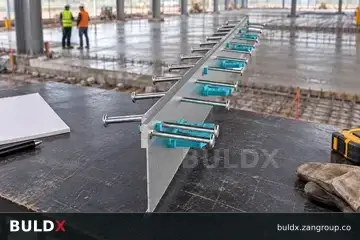
Industrial Floor JointsSelection guide
A pre-pour coordination meeting should connect the approved slab layout, joint assemblies and concrete programme. Its outcome is a clear sequence with release points, rather than a last-minute discussion beside an incomplete joint line.
Read guide: Coordinating Armoured Joints with Concrete Pour Sequences
Industrial Floor JointsSelection guide
Bay numbering makes industrial joint records usable after construction. A stable location reference links the plan, delivered components, survey results and inspection photographs even when long joint runs look alike.
Read guide: Numbering Industrial Floor Joint Bays for Traceability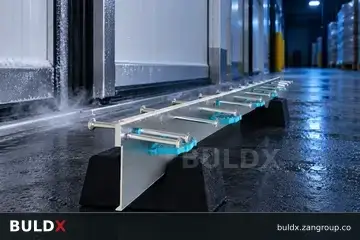
Industrial Floor JointsSelection guide
Cold store joint selection needs a project-specific temperature and floor brief. A stainless material description or a warehouse application label does not establish that a complete joint assembly suits a refrigerated environment.
Read guide: Reviewing Joint Requirements for Cold Store Floors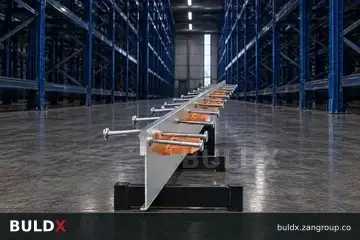
Industrial Floor JointsSelection guide
Rack layouts should be coordinated with floor joints before either package is fixed in place. The review connects rack base positions, access routes and the approved slab design without assuming that a joint can be moved to suit a convenient rack grid.
Read guide: Coordinating Floor Joints with Warehouse Rack Layouts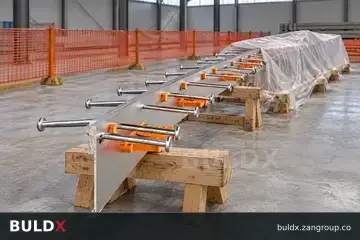
Industrial Floor JointsSelection guide
Temporary protection during concrete work should preserve the joint assembly without interfering with its approved function. Agree the protection method before placing concrete, rather than cleaning or repairing preventable damage afterwards.
Read guide: Protecting Industrial Joint Assemblies During Concrete Curing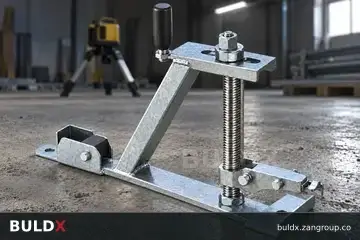
Industrial Floor JointsSelection guide
A level survey on both sides of a floor joint documents the relationship between the joint and the adjoining slab. It should distinguish measured observations from any separate floor-flatness or product performance assessment.
Read guide: Recording Floor Levels on Both Sides of a Joint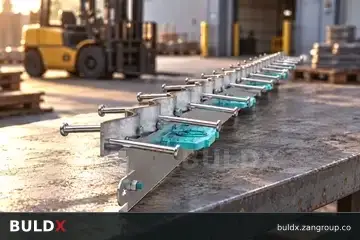
Industrial Floor JointsSelection guide
Forklift route review connects the actual traffic pattern with the installed floor joints. A vehicle weight alone is not enough information to describe how a particular wheel crosses a particular joint.
Read guide: Reviewing Joint Locations Along Forklift Routes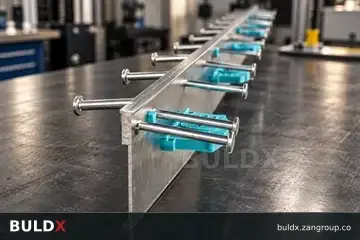
Industrial Floor JointsSelection guide
Load-transfer evidence should describe the relevant components and the complete assembly being proposed. A strong-looking steel element or a single test value should not be used to imply performance beyond the documented configuration.
Read guide: Requesting Evidence for Load Transfer Components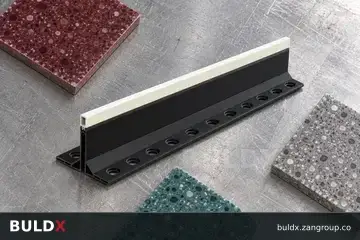
Industrial Floor JointsSelection guide
Floor coating terminations at industrial joints should be detailed with the joint system. A neat coating edge is not enough if the coating bridges a movement area or conceals an interface that needs inspection.
Read guide: Coordinating Floor Coatings at Industrial Joint Edges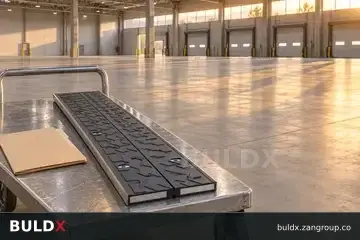
Industrial Floor JointsSelection guide
An industrial joint handover register gives the owner a usable starting point for maintenance. It should identify the installed assemblies and their locations, not simply repeat the purchase invoice.
Read guide: Creating an Industrial Joint Handover Register