Wheel stops: coordinate parking geometry before ordering
Select and position a wheel stop using the parking layout, vehicle use and pedestrian interfaces. A long rubber profile does not determine the correct location within every bay.
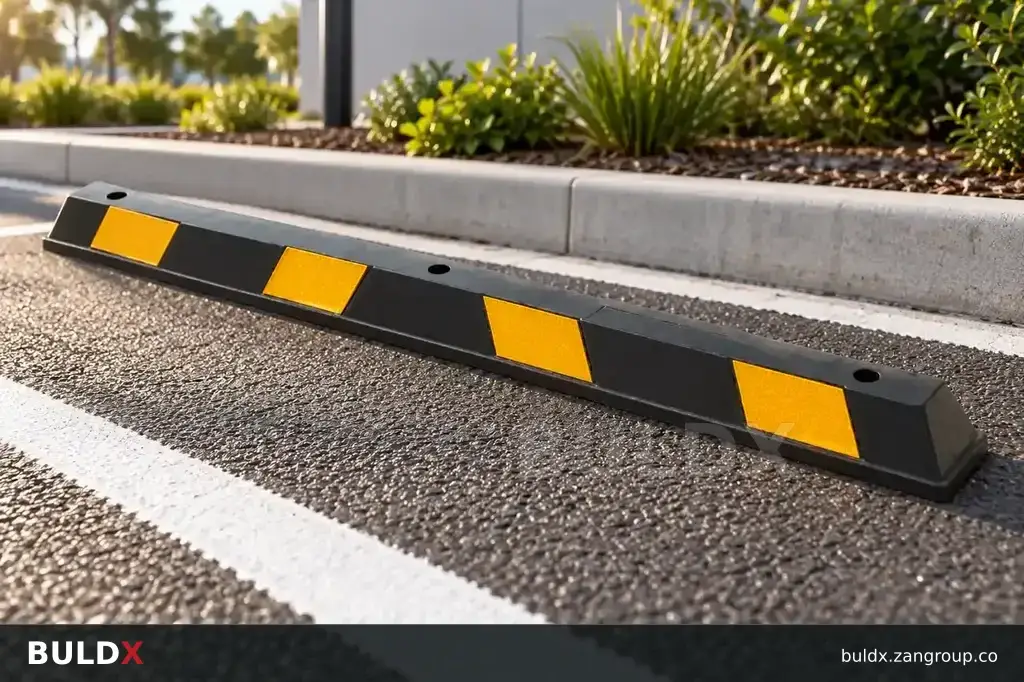
Selection considerations
Review wall clearance, overhang, bay depth and access routes with the project designer. Identify whether different vehicle classes use the spaces. Keep accessible parking and crossing areas visible on the layout so stops do not obstruct them.
Compare length, height, material and fixing in the BULDX record. Check the actual substrate before specifying anchors. Reflective details may support visibility, but they should be considered with lighting and markings. Include position references in the installation schedule instead of allowing a repeated site spacing to become an undocumented layout decision.
Before you specify or order
- Use the approved bay layout
- Review vehicle overhang and routes
- Confirm substrate-compatible fixings
Relevant BULDX catalogue examples
These records illustrate the product types discussed. Compare the full specifications before selecting; listing here does not establish project suitability or make the items interchangeable.
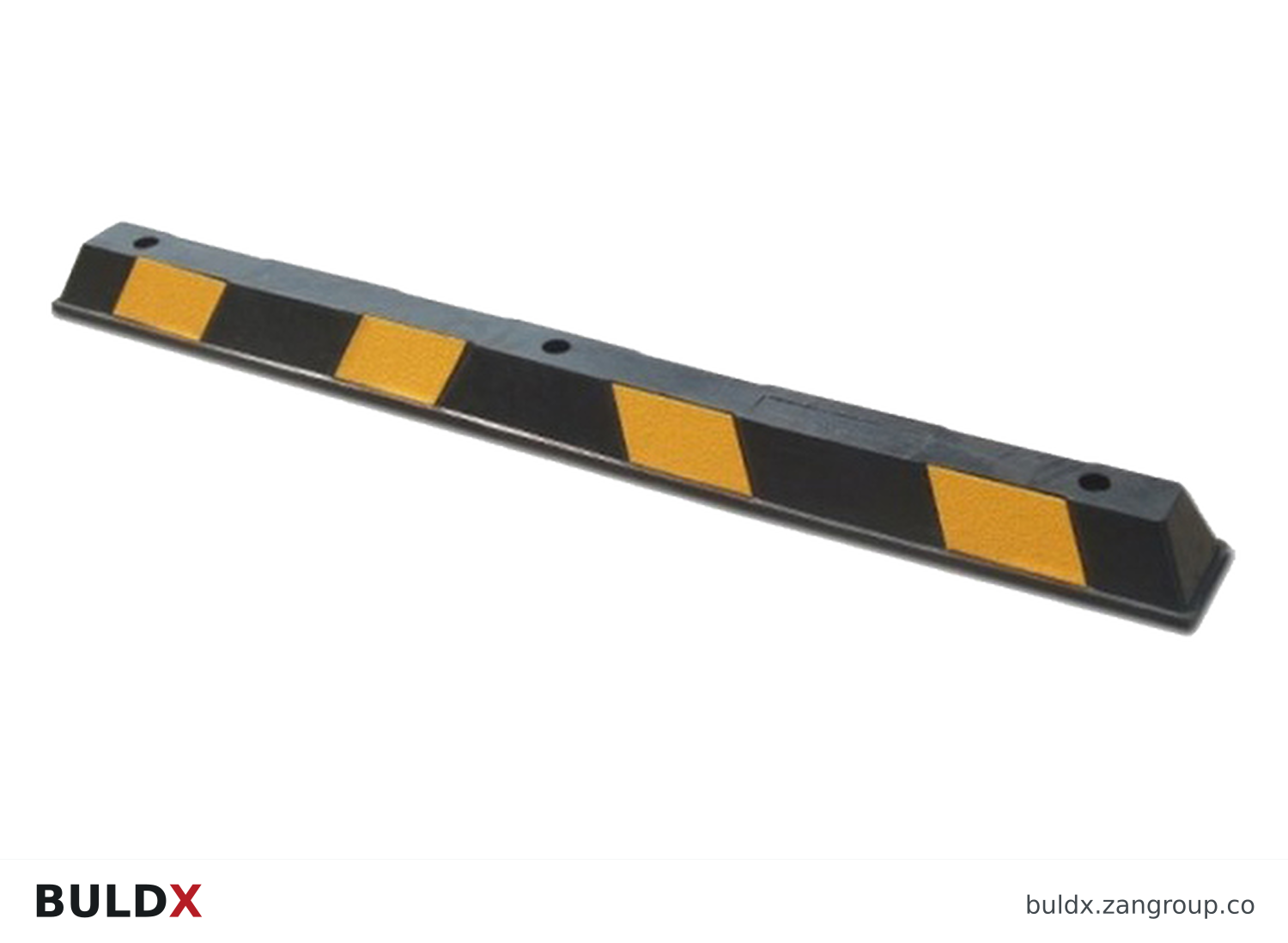
BDX-WS-RB-1830 · Product geometry from the catalogue; a family illustration may be shared by variants. Consult the selected technical documents for dimensions and the approved fixing detail.| Product and code | Selected catalogue fields |
|---|---|
BDX-WS-RB-18301830 mm Reflective Rubber Wheel StopWheel Stops |
|
Common question
Can one wheel stop position be repeated for all vehicles?
Not automatically. Bay geometry and the intended vehicle range need review.
References and scope
Product fields are from the BULDX catalogue. Confirm the current selected drawing, supporting performance documents and approved project detail before ordering. External references, where listed, provide background guidance and do not certify these products.