Tactile surface materials: exposure and fixing checks
Choose tactile surface materials for the supporting floor and expected exposure. A material label alone does not prove that the installed product meets the project's accessibility requirements.
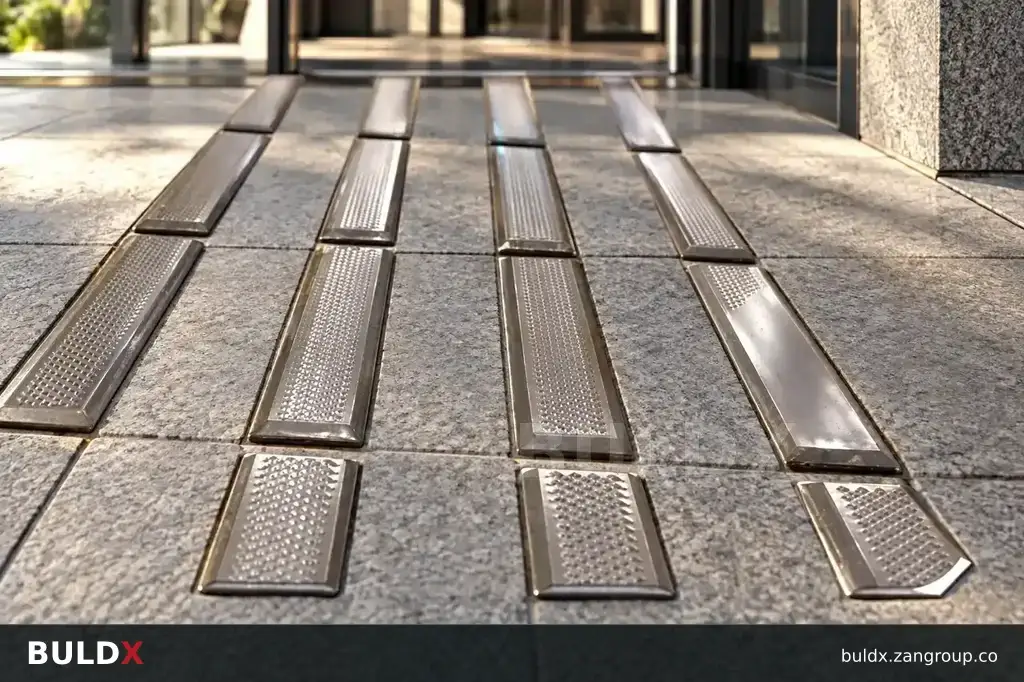
Selection considerations
Identify interior or exterior use, cleaning conditions and the actual substrate. Confirm whether the selected item is adhesive-fixed, mechanically attached or embedded according to its documentation. Ask for dimensions and performance information that the catalogue does not state.
Review the completed edge and attachment on a representative sample. Keep any required slip, contrast or dimensional evidence tied to the actual product and installation. Do not transfer a certification from an unrelated tactile surface simply because its appearance is similar.
Before you specify or order
- Identify substrate and exposure
- Confirm the installation method
- Request product-specific supporting data
Relevant BULDX catalogue examples
These records illustrate the product types discussed. Compare the full specifications before selecting; listing here does not establish project suitability or make the items interchangeable.
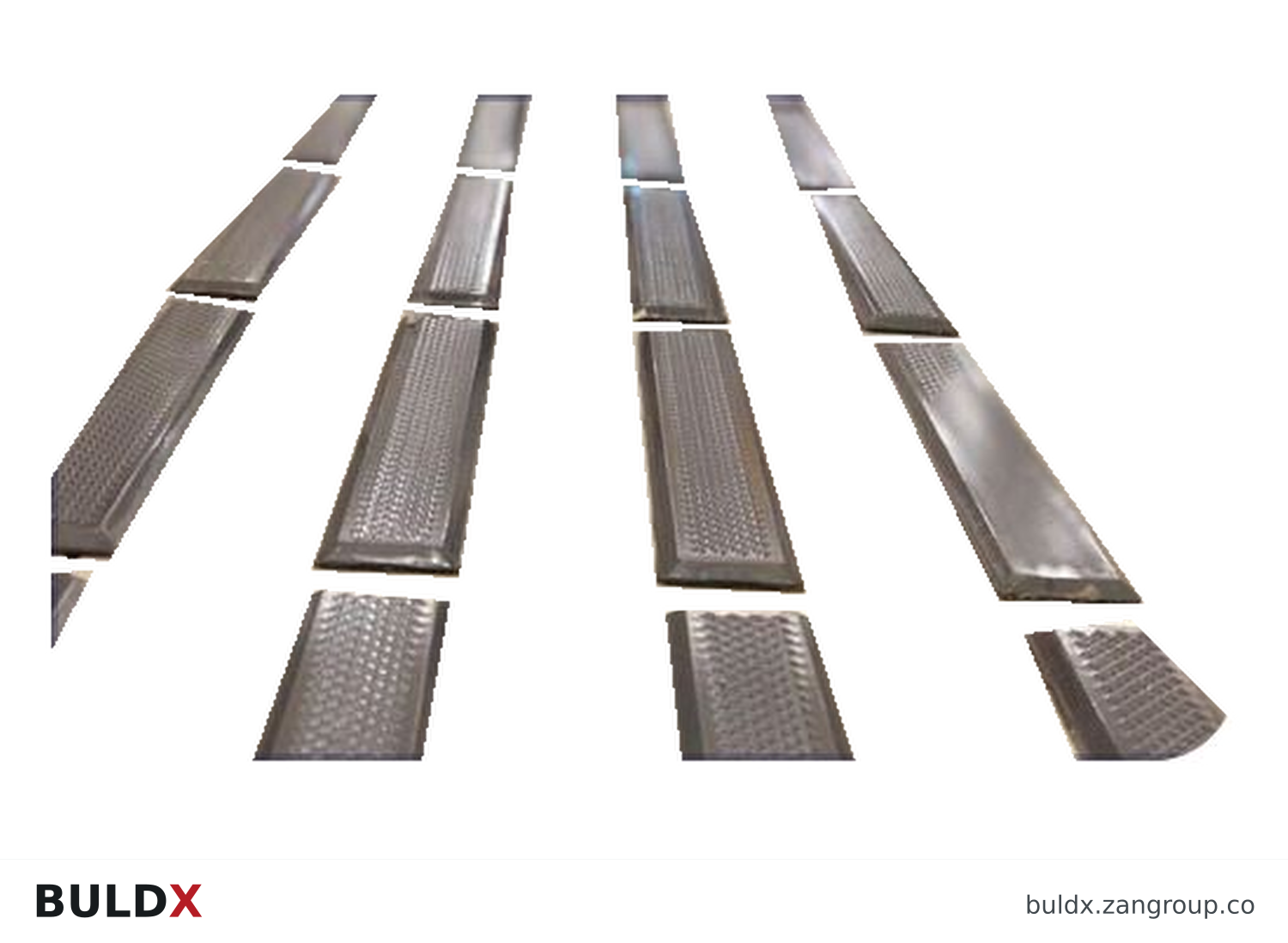
BDX-TS-DIR · Product geometry from the catalogue; a family illustration may be shared by variants. Consult the selected technical documents for dimensions and the approved fixing detail.| Product and code | Selected catalogue fields |
|---|---|
BDX-TS-DIRDirectional Tactile SurfaceTactile Surfaces |
|
BDX-TS-WRNWarning Tactile SurfaceTactile Surfaces |
|
Common question
Can a material name prove accessibility compliance?
No. Pattern, dimensions, installation and the applicable project requirements also matter.
References and scope
Product fields are from the BULDX catalogue. Confirm the current selected drawing, supporting performance documents and approved project detail before ordering. External references, where listed, provide background guidance and do not certify these products.